 7 days
Trek
Kilimanjaro — Machame Route, 7 Days
The Whiskey Route, with the extra day that makes the difference.
View day by dayTrekking
Africa's highest mountain, and the world's tallest free-standing peak.
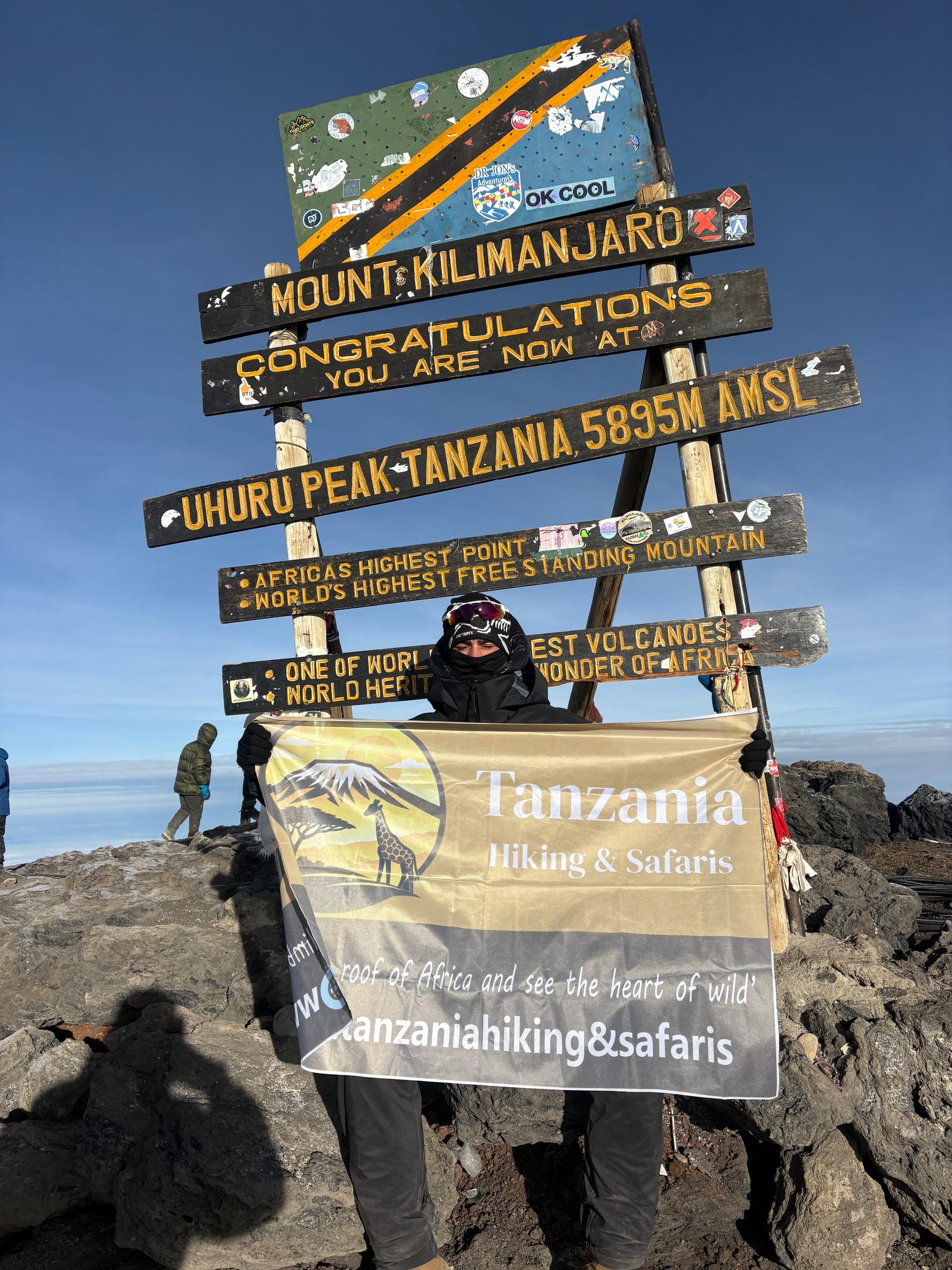
Kilimanjaro reaches 5,895 m (19,341 ft) at Uhuru Peak. It is the highest mountain in Africa and the tallest free-standing mountain on earth — no range around it, just a snow-capped volcano rising alone out of the plains. No ropes, no technical climbing: the difficulty is altitude, and the answer to altitude is time.
Machame (7 days) is the most popular and has an excellent walk-high, sleep-low profile. Lemosho (8 days) approaches from the west, is quieter for the first two days and has the best acclimatisation of the common routes. Marangu (5–6 days) is the only hut route and has the lowest success rate because it is short. Rongai (6–7 days) comes from the north and stays driest in the shoulder seasons.
Summit success tracks days on the mountain more closely than fitness or age. A seven-day Machame climb has a markedly better success rate than the same route in six. Every itinerary we run includes the extra acclimatisation day.
You start in cultivated farmland, walk up through rainforest, heather and moorland, cross an alpine desert and finish on an arctic summit — the equivalent of walking from the equator to the poles in a week.
7 days
Trek
The Whiskey Route, with the extra day that makes the difference.
View day by day
8 days
Trek
The quietest start, the best acclimatisation, the highest success rate.
View day by day
11 days
Trek
Climb Meru first, rest, then take Kilimanjaro with 4,566 m already in your legs.
View day by day 1 days
Day trip
A Chagga village on Kilimanjaro's lower slopes, a waterfall, and coffee you roast yourself.
View day by day 1 days
Day trip
A crater lake on the Kenyan border, under Kilimanjaro.
View day by day
6 days
Trek
The shortest sensible Machame, for travellers tight on days.
View day by day
6 days
Trek
The only hut route on the mountain — a bed and a roof every night.
View day by day
6 days
Trek
The steepest and hardest way up. Experienced trekkers only.
View day by day
7 days
Trek
The quiet western approach, one day shorter than the classic eight.
View day by day
7 days
Trek
The northern approach — the driest side, and the quietest.
View day by day
8 days
Trek
Lemosho's twin, starting high by vehicle on the Shira Plateau.
View day by day
9 days
Trek
The longest route, the quietest trail, and the highest success rate.
View day by day
10 days
Trek
A night inside the summit crater, beside the glaciers and the ash pit.
View day by day
14 days
Trek & Safari
The mountain, the plains and the ocean in one trip.
View day by dayIt depends almost entirely on the number of days. Seven- and eight-day itineraries are far more successful than five-day ones. We do not sell five-day summit attempts.
No, but you need to be comfortable walking six to seven hours a day for a week. Train with long walks on hills, in the boots you will wear.
Summit night is usually between −7°C and −20°C with wind chill. The rest of the climb is mild by comparison.